
The Brief, 74
05 September 2026
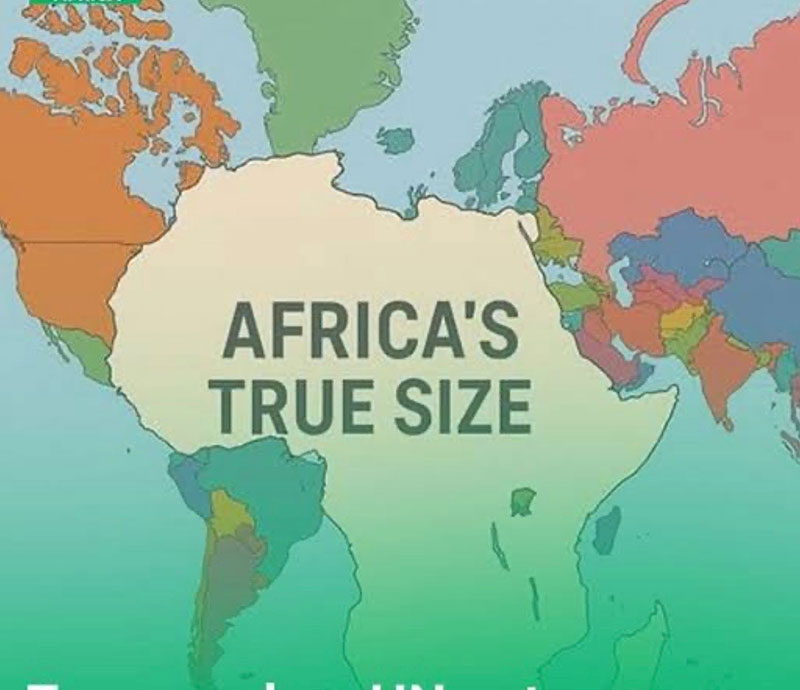
The majority of UN member states voted to re-examine the size of the map of Africa. United States (US) was the only country that voted against the suggestion. A total of 164 countries voted in favour, 6 abstained, and 1, the US, voted against the resolution. There are a number of reasons why it is important to relook at Africa and its true size. The resolution was sponsored by Togo and supported by the African Union (AU) and several African countries. Togo and those who sponsored the “correct the distortions of the traditional Mercator world map” argue that Africa’s true size is not just about cartography but also about how people understand Africa’s economic, political, strategic and cultural significance.
However, there is a different view that the true reflection of Africa's size could serve a sinister motive for those seeking to continue exploiting Africa.
Size comes with responsibilities, and Africa’s vast critical mineral resources could be behind the remapping debates, sceptics argue. Africa will, at some point, have to own up to and take an equal share of global responsibilities in solving global problems, including climate change. Over the years, Africa has been “excused from taking its equal share of global responsibilities” because of its financial constraints. The revision of the continent's size could prompt reconsideration of Africa’s financial responsibilities in addressing global problems. Africa could be compelled to provide access to its vast mineral resources as part of its contribution in exchange for its inability to directly meet its financial responsibilities
Africa’s problems have never been about the size of the continent. The real challenges of Africa have been about good governance, mismanagement of Africa’s resources, tribalism, and clumsy border-drawing. The clumsy border drawing, for example, resulted in countries being granted enormous territories, lumping together tribes and ethnic groups who were traditionally hostile to each other. This culminated in further complications due to the insistence on centralising power and authority in governance.
The success of European countries has arguably been due in part to size. Some European countries are smaller than some big African cities, making them easier to manage, including service delivery. For example, the Cape Town municipal area is much larger than Malta, and the Greater Johannesburg municipal area is much larger than Luxembourg.
In conclusion, a true reflection of Africa could also lead to a new discussion of resizing, remapping, and demarcating African nations. It could also trigger a discussion on secession as a corrective measure. Strategic regions with resources could become new independent states.
Afrasid is available for analysis and commentary.
www.afrasid.org