Afrasid
  • Home
  • Who we are
    • About Us
    • Fellows
    • Partnerships
  • The Brief
  • Publications
    • Articles
    • Reports
    • China Policy
  • Multimedia
    • Photo Gallery
    • Podcasts
    • Videos
  • Contact Us
Must South Africa declare a state of emergency?

Must South Africa declare a state of emergency?

Thembisa Fakude The Brief 28 September 2026

The Brief, No 75
28 September 2026

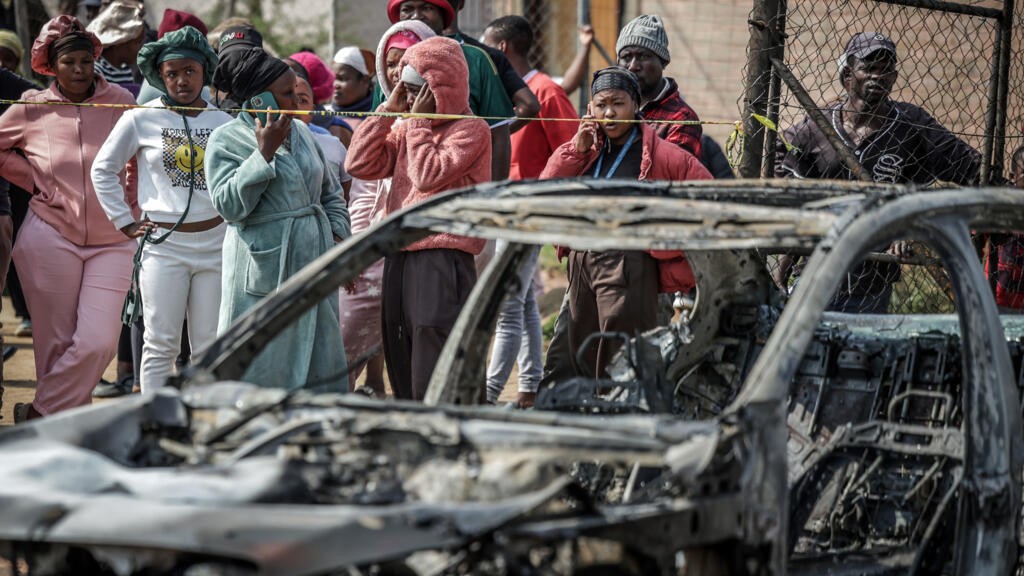
The current murder rate and the mass killing of women are serious events that do not warrant side-show commentary from the government and the president. There is an ongoing investigation into 10 women who were physically abused and then killed in areas near Ekurhuleni, on the outskirts of Johannesburg.

According to the BBC, twenty-eight people have been killed in two mass shootings, hours apart, in South Africa, the latest gun violence to hit the country. Eighteen people were killed when eight gunmen stormed a bar near Johannesburg on Saturday evening, with 14 more injured.

In a separate shooting in the early hours of Sunday morning, 10 people were killed outside an entertainment venue in a township near Cape Town, and a further 11 were injured. These are serious times. South Africa is in a state of terrorism. We are being terrorised by faceless killers and those who are seeking to impose discord in this country.

These uncertain times require a different measure of intervention; it cannot be business as usual. The killing of civilians and general criminality suggest organised crime directed by someone somewhere.

South Africa’s foreign policy position, which often bites off more than it can chew, has created enemies and continues to do so. We therefore cannot act as if all is usual; we should have anticipated our situation when we started entering the big stage. As we have said before, we entered a war, at least in terms of our foreign policy, a gunfight carrying a butter knife.

The declaration of the state of emergency is long overdue. The president has the right, under the constitution, to declare a state of emergency when the nation is threatened by serious disorder, amongst other things. The state of emergency is supposed to restore order in such circumstances.

We are in a state of terrorism. Restoring peace, stability and normality is essential.

Afrasid is available for analysis and commentary

www.afrasid.org
The UN votes on resolution to show true size of Africa on maps – Must Africa rejoice?

The UN votes on resolution to show true size of Africa on maps – Must Africa rejoice?

Thembisa Fakude The Brief 07 September 2026

The Brief, 74
05 September 2026

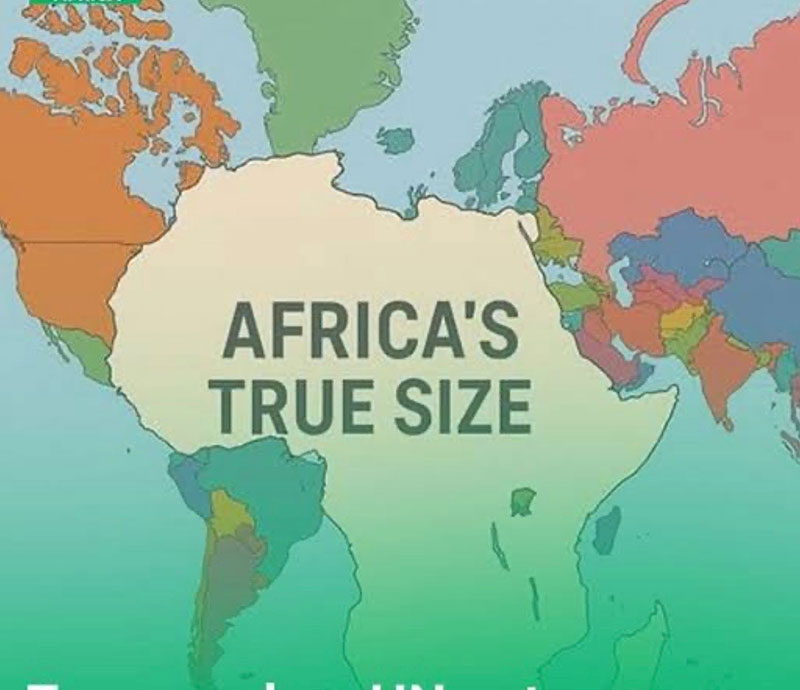
The majority of UN member states voted to re-examine the size of the map of Africa. United States (US) was the only country that voted against the suggestion. A total of 164 countries voted in favour, 6 abstained, and 1, the US, voted against the resolution. There are a number of reasons why it is important to relook at Africa and its true size. The resolution was sponsored by Togo and supported by the African Union (AU) and several African countries. Togo and those who sponsored the “correct the distortions of the traditional Mercator world map” argue that Africa’s true size is not just about cartography but also about how people understand Africa’s economic, political, strategic and cultural significance. 

However, there is a different view that the true reflection of Africa's size could serve a sinister motive for those seeking to continue exploiting Africa.

Size comes with responsibilities, and Africa’s vast critical mineral resources could be behind the remapping debates, sceptics argue. Africa will, at some point, have to own up to and take an equal share of global responsibilities in solving global problems, including climate change. Over the years, Africa has been “excused from taking its equal share of global responsibilities” because of its financial constraints. The revision of the continent's size could prompt reconsideration of Africa’s financial responsibilities in addressing global problems. Africa could be compelled to provide access to its vast mineral resources as part of its contribution in exchange for its inability to directly meet its financial responsibilities

Africa’s problems have never been about the size of the continent. The real challenges of Africa have been about good governance, mismanagement of Africa’s resources, tribalism, and clumsy border-drawing. The clumsy border drawing, for example, resulted in countries being granted enormous territories, lumping together tribes and ethnic groups who were traditionally hostile to each other. This culminated in further complications due to the insistence on centralising power and authority in governance.

The success of European countries has arguably been due in part to size. Some European countries are smaller than some big African cities, making them easier to manage, including service delivery. For example, the Cape Town municipal area is much larger than Malta, and the Greater Johannesburg municipal area is much larger than Luxembourg.

In conclusion, a true reflection of Africa could also lead to a new discussion of resizing, remapping, and demarcating African nations.  It could also trigger a discussion on secession as a corrective measure. Strategic regions with resources could become new independent states.

Afrasid is available for analysis and commentary.

www.afrasid.org


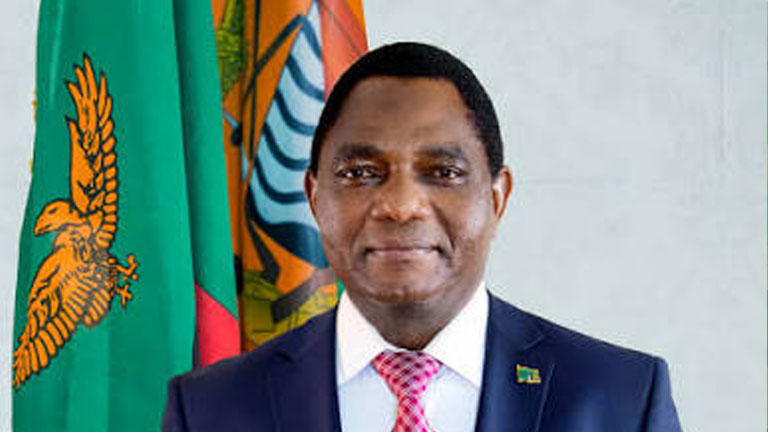
Five more years for President Hakainde Hichilema of Zambia

Five more years for President Hakainde Hichilema of Zambia

Thembisa Fakude The Brief 18 August 2026

The Brief, No 74
18 August 2025

President Hakainde Hichilema of Zambia has won the elections, giving him five more years in power. The Zambian economy has been performing relatively well, with the Zambian Kwacha often stronger than the South African Rand, a development most Zambians celebrate. Notwithstanding, Zambia remains poor and underdeveloped; Hakainde has a tremendous amount of work ahead of him.

Zambia is also a contested space for the United States (US) and China. China has entrenched itself in the economy through major mining contracts. The US is keen to extract critical minerals from Zambia to support its AI and EV industries. Hichilema has demanded more from China, insisting on a mutually beneficial relationship. Zambia is one of the world’s largest copper producers, targeting 1 million tons of copper in 2026.

The rise of artificial intelligence (AI) and electric vehicles (EVs), among others, has created new opportunities for Zambia. It also means Zambia will become a new battleground between China and the US over critical minerals essential to AI and EVs. Zambia remains largely dependent on South Africa and Tanzania for the transport of its exports; South African ports, particularly Durban, are key in this regard.

The Lobito Corridor in Angola will also play an important role in Zambia’s economy. The Lobito Corridor is intended to connect Zambia’s Copperbelt to the Atlantic port of Lobito in Angola. This gives Zambia an alternative route and quicker access to the Western market, rather than going via South Africa or Tanzania.

What does all of this mean for South Africa?

Africa Asia Dialogues is available for analysis and commentary.

www.afrasid.org

Africa will be the next contested ground as concentration shifts from the Strait of Hormuz to Bab al Mandeb

Africa will be the next contested ground as concentration shifts from the Strait of Hormuz to Bab al Mandeb

Jayde Hilton The Brief 28 July 2026

The Brief, No 73
28 August 2026

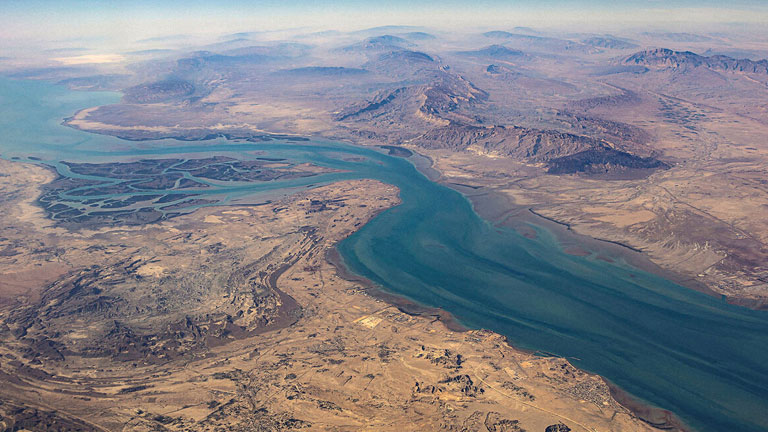
The blocking of the Strait of Hormuz, including its administration, has changed the political reality in the Gulf and will change the geopolitics in Sub-Saharan Africa.  Iran is going to dominate the Strait of Hormuz and will be a key player in its administration.  Moving forward. 

  • This is likely to impact energy prices and, indeed, the transportation and all associated costs of moving goods from the Gulf.
  • Blocking the Strait of Hormuz is likely to benefit Saudi Arabia in the long run, especially if Gulf countries begin to use the Red Sea as an alternative for transporting their exports. Saudi ports in the Red Sea, particularly the port of Yanbu west of Saudi Arabia, are likely to expand, and pipelines from other Gulf countries are likely to proliferate to avoid the Strait of Hormuz.
  • Iran could therefore, in the long run, be left with the administration of the Strait of Hormuz with less traffic. However, that will take a long time and will require huge investments for the Gulf countries to invest in pipelines to the Red Sea, which is a long distance to cover.
  • Egypt is likely to benefit when that eventually happens, as this could also increase traffic in the Suez Canal.

However, the Saudi Arabian ports, including the port of Yanbu, could act as an alternative to the Strait of Hormuz.  They will certainly not be able to secure and facilitate the transportation of oil, gas, and other petrochemicals southeast of the Red Sea into Asia,

The Houthis in Yemen, with the support of Iran, are likely to block Bab al Mandeb and anything to the Gulf of Eden and the Indian Ocean.  Bab al Mandeb is the key passage for cargo ships from Europe to East Asia and vice versa

This will certainly prompt a larger change in course for traffic from the Red Sea, which currently transports over fifteen percent of the global maritime traffic. 

The Cape of Good Hope is most likely to become a secure route once again.  This will certainly impact South Africa’s geopolitics as traffic from the Gulf, Europe, and Asia will likely start sailing via South Africa.  Given the underdeveloped infrastructure in other African countries bordering both the Indian and the Atlantic Oceans, South Africa is likely to take the lion’s share of the business.

The big question is whether South Africa is prepared or preparing for what could be an economic and geopolitical change heading its way?

Africa Asia Dialogues is available for analysis and commentary

www.afrasid.org
 

According to Trump Israel will not use nuclear weapons against Iran

According to Trump Israel will not use nuclear weapons against Iran

Thembisa Fakude The Brief 17 March 2026

The Brief No. 72
15 March 2026

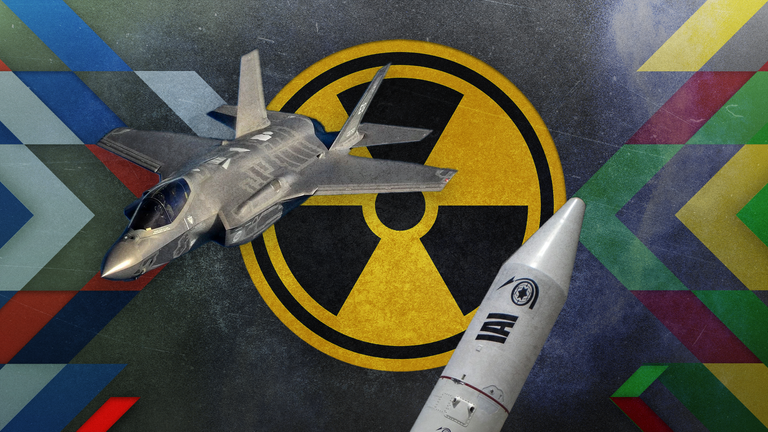
When asked whether Israel will resort to using a nuclear bomb against Iran, President Trump said that Israel “will not do that”. 

Trump’s comment is extremely concerning, it is also diplomatically damaging to Israel:

  1. Israel has always denied that it has nuclear weapons. Trump’s comment exposes Israel and confirms that it does indeed have nuclear weapons.
  2. Moreover, Trump and Netanyahu have repeatedly argued against “Iran acquiring a nuclear weapon”. Yet Israel, a country that continues to commit a genocide in Gaza has nuclear weapons. According to the United Nations (UN) Independent International Commission of Inquiry on the Occupied Palestinian Territory; including East Jerusalem, and Israel; Israel has committed genocide against Palestinians in the Gaza Strip. 
  3. Trump has also called upon other countries - particularly those who are using the Strait of Hurmuz to import oil and gas from the Gulf - to help the US in securing the movement of ships in the Strait of Hurmuz. Trump’s comment suggests that the US and Israel are not winning the war against Iran

Must we believe Trump or take what he says with a pinch of salt? 

Afrasid is available for commentary and analysis

www.afrasid.org


Page 1 of 13

  • 1
  • 2
  • 3
  • 4
  • 5
  • 6
  • 7
  • 8
  • 9
  • 10
Support Africa Asia Dialogues (Afrasid)

© 2026 AFRASID. All Rights Reserved. Designed & Hosted by Netwise Multimedia
Afrasid
  • Home
  • Who we are
    • About Us
    • Fellows
    • Partnerships
  • The Brief
  • Publications
    • Articles
    • Reports
    • China Policy
  • Multimedia
    • Photo Gallery
    • Podcasts
    • Videos
  • Contact Us